
Searching for custom cabinets near me can turn up cabinet shops, kitchen and bath providers, remodelers, and retail options. The challenge is knowing what each one means by “custom,” what is included in the estimate, and whether the proposed design solves your actual storage or space problem. Start by documenting your room, priorities, and budget range. Then compare providers using the same questions about design, specifications, installation, schedule, and warranty. Local search and review platforms can help identify possible candidates, but the listings themselves do not establish that a provider is right for your project.
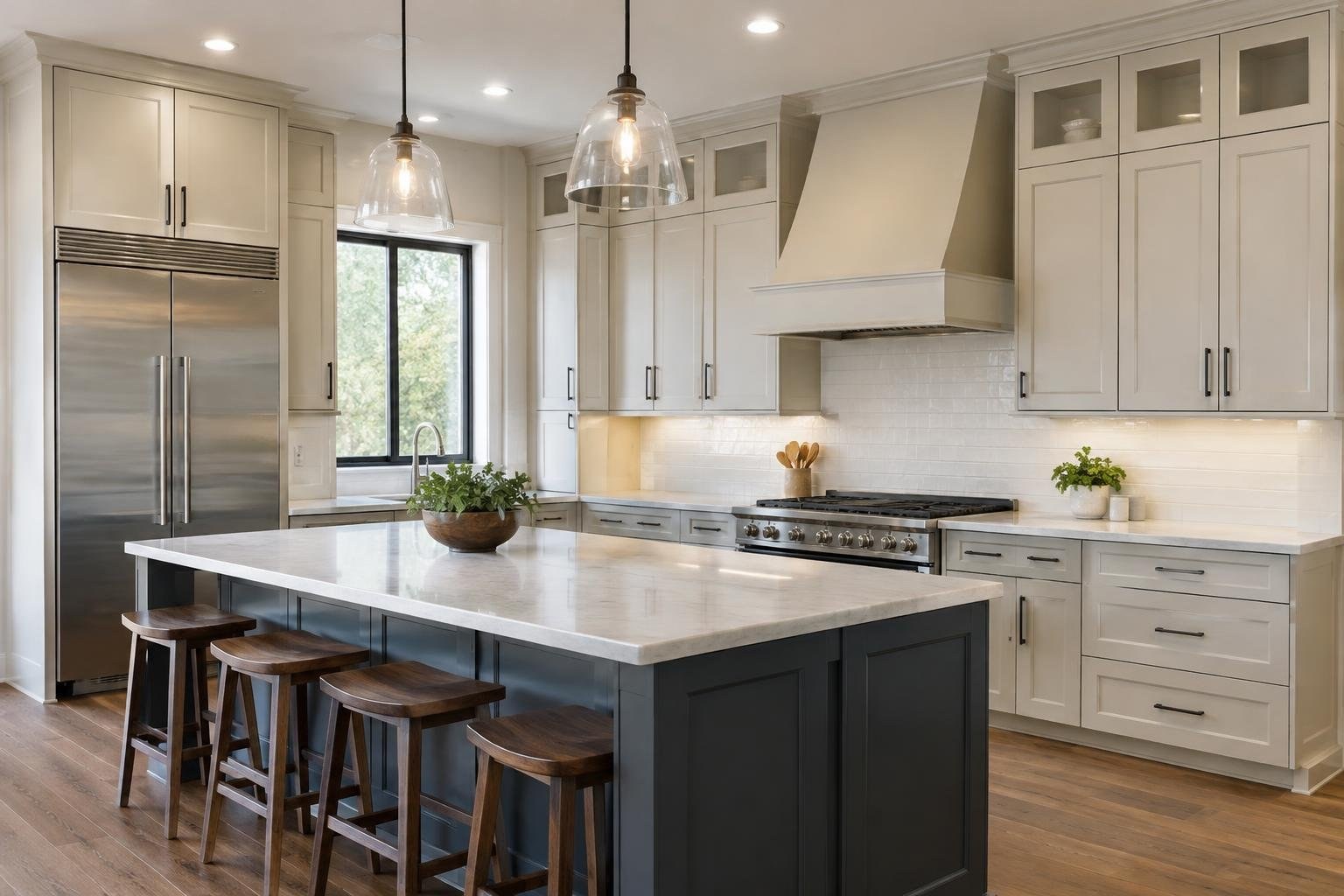
What Does a Custom Cabinet Project Include?
A useful working definition is cabinetry planned or configured for the needs of a particular project, rather than choosing only from an unchanged standard arrangement. That can mean adapting dimensions, storage, appearance, or a cabinet shape. It does not necessarily mean every component is made from scratch.
Offerings vary. Retailers may provide both custom and semi-custom product lines, and listings for local cabinetmakers show that providers work across different types of cabinetry and projects. Ask what “custom” means in the specific proposal: which dimensions and design choices are adjustable, what comes from a standard line, and which changes affect price or timing.
Custom work may be worth exploring when a room has an unusual constraint or a clear storage need that standard choices do not address. If your priority is simply replacing cabinets with familiar sizes and styles, compare less customized choices too. The right decision is the one that meets your requirements without adding unnecessary complexity.
How Does the Custom Cabinet Process Work?
A provider’s process should be clear before you approve a design or place an order. Ask how the work moves from your first discussion to a finished installation, and who owns each step.
- Define the project. Identify the room, what is not working, the items to store, your style preferences, and your spending priorities.
- Review the site. Discuss walls, corners, ceiling height, openings, appliances, fixtures, and visible utility locations. Ask who takes and verifies final measurements.
- Develop and approve the plan. Review cabinet locations, dimensions, door and finish choices, storage features, and any panels or fillers. Request written specifications, not only a drawing or sample.
- Confirm scope and schedule. Clarify ordering, delivery, installation, removal, cleanup, payment milestones, and how revisions are approved.
- Inspect completion. Walk through the work with the provider, note adjustments or unresolved items in writing, and obtain care and warranty information.
Not every provider handles every phase. Establish who coordinates work outside the cabinet scope before assuming a single quote covers the whole remodel.
What Signs Suggest You May Need Custom Cabinets?
Consider custom options if the current arrangement leaves a persistent problem that a standard replacement may not solve. Examples include a difficult-to-use corner, storage that does not fit your belongings, an awkward gap, or a room feature that constrains cabinet placement. These are reasons to investigate a tailored design, not automatic proof that custom is the best answer.
Write down the problem before discussing door styles. Note what you store, what is hard to reach, where doors or drawers conflict, and which appliances or fixtures must remain accessible. For a kitchen, consider everyday workflow and appliance clearances. For a bathroom, account for the sink, plumbing, and items used at the vanity. For other rooms, list equipment, supplies, and any access or utility needs.
If the existing cabinet boxes are sound and the problem is limited to appearance, ask whether a finish update or replacement fronts could be considered instead. If there is damage or a layout issue, ask the provider to explain why the proposed scope addresses the cause rather than just its visible symptoms.
How Much Do Custom Cabinets Cost?
Custom cabinet pricing cannot be judged from the word “custom” alone. The sources available for this guide do not establish a dependable price range for every location and project, so treat any early figure as a preliminary estimate until it is tied to your plans and specifications.
Ask providers to itemize the cabinet package and show what is separate. Clarify whether the proposal includes design, measuring, delivery, installation, removal and disposal, finish panels, fillers, hardware, and final adjustments. Also identify work that may be outside the cabinet contract, such as countertop, flooring, plumbing, electrical, wall repair, or appliance changes.
For a fair comparison, send the same room information and requested features to each provider. Ask them to specify cabinet quantity or layout, material and finish choices, hardware, and installation assumptions. A lower total may reflect a narrower scope, different specifications, or work left for you to arrange. Compare the written deliverables and exclusions before weighing price.
What Factors Affect the Project and Its Price?
Project cost and complexity respond to choices that should be settled before ordering. Ask providers to identify which decisions have the largest effect on your particular estimate; do not assume every upgrade matters equally.
- Amount and layout: The cabinet count, sizes, and arrangement determine the scope being quoted.
- Degree of customization: Ask what is a standard configuration and what requires a change to dimensions or design.
- Materials and finish: Request exact descriptions and samples where possible. A broad label such as “wood” or “painted” is not a complete specification.
- Interior features and hardware: List organizers, drawer features, hinges, pulls, and other selections individually.
- Site and project work: Existing conditions, removal, installation, and coordination with other remodeling tasks may affect the total scope.
- Changes after approval: Ask how revisions are priced and whether they can affect production or installation dates.
Have each provider explain assumptions about walls, floors, appliance dimensions, and utilities. Resolving uncertainties in writing makes proposals easier to compare.
Custom, Semi-Custom, or Stock: Which Should You Compare?
Compare the amount of design flexibility you need, not just product labels. Retail product pages describe both custom and semi-custom options, while local cabinetmaker listings can help you identify providers to ask about project-specific work. Neither label by itself tells you the final construction, service, or installation quality.
| Option | Potential fit | What to verify |
|---|---|---|
| Stock | Useful to investigate when standard sizes and choices meet the plan. | Available sizes, finish, interior configuration, and any fillers needed. |
| Semi-custom | Worth comparing when a product line offers choices but the plan does not require fully individualized work. | Which dimensions and features are adjustable, and what changes cost extra. |
| Custom cabinetmaker or custom line | Worth considering when project-specific dimensions or details matter. | What is actually made or modified for the project, design responsibility, specifications, schedule, and installation scope. |
Ask to compare alternatives against the same layout and storage priorities. A provider should be able to explain the tradeoff between flexibility, cost, decision time, and the practical benefit of each proposed change.
What Should You Expect, Including Timing?
Expect multiple decisions and coordination points, but do not rely on a generic promise about how long a project will take.
Ask for a schedule with separate target dates for design sign-off, ordering or production, delivery, installation, and completion of any remaining adjustments. Ask what the schedule assumes about your selections, site access, other trades, and room readiness. Find out how the provider will notify you if a date changes.
Before delivery, confirm where cabinets will be received and stored, who will protect the work area, and whether old cabinets or other materials will be removed. Do not schedule related work on an assumption that the cabinetry will arrive by a particular date unless the provider has confirmed it in writing. Keep a record of approved selections and changes so everyone is working from the same plan.
How to Find and Choose a Qualified Local Provider
Start by collecting several possible providers, then narrow the list through project fit and written details. Directory and review platforms can help you discover cabinetmakers and read public feedback. Their listings and review counts are discovery tools, not independent confirmation of workmanship, insurance, licensing, or suitability for your job.
Ask prospective providers for:
- Examples of work similar in scope or complexity to yours.
- References you may contact, and permission to ask about communication, schedule, installation, and issue resolution.
- A written proposal with cabinet specifications, included work, exclusions, and change-order terms.
- The name of the person responsible for measuring, design approval, delivery, and installation.
- Proof of insurance and any license or registration required for the work in your location.
- Warranty documents, payment milestones, cleanup expectations, and a clear route for raising concerns.
Compare how directly each provider answers questions. A polished portfolio is useful, but it should be supported by a specific plan for your room and clear responsibility for the work.
Permits, Credentials, Warranties, and Safety
Requirements depend on your location and the work involved. Ask the local building department whether permits or inspections apply, particularly if the project includes changes to plumbing, electrical systems, structural elements, or other regulated work. Confirm responsibilities in writing rather than assuming the cabinet provider or another contractor will handle them.
Check credentials that apply to the actual scope. Requirements for cabinet supply, installation, and broader remodeling work may not be the same. Ask who performs each task, whether that person or company holds any locally required license, and what insurance applies to the project. Verify documents directly where appropriate.
Request the warranty terms before approving the order. Ask what products and labor are covered, how long coverage lasts, what conditions or exclusions apply, and whom to contact if a problem appears. Keep the signed agreement, approved drawings, product specifications, receipts, and completion notes together. Do not treat a verbal assurance as a substitute for written terms.
Ways to Reduce Cost Without Creating New Problems
Saving safely means reducing unnecessary scope while keeping essential measurements, installation, and performance requirements intact. Ask providers to price useful alternatives rather than simply deleting items without checking the consequences.
- Separate must-have storage and fit requirements from decorative preferences.
- Compare standard, semi-custom, and custom configurations for the same basic layout.
- Ask whether fewer special sizes or fewer finish and hardware variations would reduce complexity.
- Keep the existing layout if it works, rather than changing plumbing or electrical locations solely for appearance.
- Consider whether existing cabinets are candidates for repair or an appearance update before replacing them, but have their condition assessed.
- Request an itemized scope so you can identify optional work and coordinate other work deliberately.
Do not save by skipping site verification, accepting unclear material descriptions, or hiring someone who cannot explain installation responsibility. Do not attempt electrical, plumbing, structural, or regulated work unless qualified and permitted where required. Confirm local rules before proceeding.
Mistakes, Red Flags, and a Pre-Approval Checklist
Use this checklist before approving a design or paying a deposit:
- Have the room, fixed features, appliances, and storage needs been discussed?
- Is the final measurement responsibility clear?
- Does the plan show cabinet locations and dimensions, and are selections recorded?
- Does the quote specify materials, finishes, hardware, delivery, installation, removal, and cleanup?
- Are exclusions, change-order pricing, payment milestones, and schedule assumptions written down?
- Have you checked references and examples relevant to the work?
- Do you know who handles permits, required credentials, warranty claims, and installation adjustments?
Common warning signs include a vague one-line quote, pressure to approve before details are settled, unclear responsibility for measuring, unexplained exclusions, or promises that are not written into the agreement. A low price is not automatically a problem, but ask what differs from competing proposals. For example, homeowner reviews in search results include comments about cabinet quality and project-specific pieces, but individual comments are not a substitute for checking the actual provider and written scope.
Use Local Listings as a Starting Point
Use local search results to build a shortlist, not to make the final decision. Houzz and other public platforms display local cabinetmaker listings and reviews; their breadth varies by location and should not be treated as a guarantee that a listed provider is qualified for your project. Check current contact details and confirm that a candidate serves your area directly.
Once you have a shortlist, share the same project outline with each provider. A useful outline includes the room, approximate dimensions, photos, existing conditions, appliances or fixtures, storage goals, style preferences, and desired scope. Ask each provider to identify what further information is needed for a firm proposal.
Explore cabinet options at CabinetSupply.com for your next project. Use your research to make a list of design priorities and questions before deciding which local provider to contact.
Frequently asked questions
What does custom cabinetry mean?
Custom cabinets are designed or configured for a particular project, but the amount of customization varies. Ask whether the provider is building to your measurements, modifying standard cabinet sizes, or offering choices from a predefined product line.
How much do custom cabinets cost?
There is no reliable single price without details about the room, cabinet quantity, materials, finish, hardware, and installation scope. Request an itemized estimate and compare the same inclusions across providers.
How long does it take to get custom cabinets?
Timing depends on design decisions, production, delivery, site readiness, and installation scheduling. Ask for separate target dates for design approval, delivery, installation, and completion, and ask what could change them.
Are custom cabinets worth it?
Custom cabinets can be useful when a project needs a particular size, shape, storage arrangement, or visual fit. If standard dimensions meet your needs, compare stock and semi-custom choices before paying for more customization.
How do I choose a custom cabinetmaker?
Ask for recent project examples, references, a written scope, material and hardware specifications, installation details, warranty terms, payment schedule, and a process for handling changes or problems.
What is the difference between custom and semi-custom cabinets?
Some providers offer both custom and semi-custom lines, so the label alone does not tell you how much can be changed. Ask which dimensions, finishes, door styles, and interior features are configurable, and what changes cost extra.
Does a custom cabinet quote include installation?
Do not assume installation is included. Confirm whether the estimate covers delivery, removal of existing cabinets, installation, fillers and panels, adjustments, cleanup, and any work needed to prepare walls or utilities.
Do I need a permit to install custom cabinets?
Permit requirements depend on the work and location. Ask your local building department or qualified project professional whether permits apply, especially if the project changes plumbing, electrical, structural elements, or other regulated work.
People Also Ask
When should I choose custom cabinets?
Custom cabinetry may be a good fit when your room or storage goals call for a specific configuration. Compare it with standard options first, since a suitable stock or semi-custom product may meet your needs with fewer design decisions.
What should I prepare before meeting a cabinetmaker?
Begin with the room dimensions, photos, appliance or fixture details, storage priorities, and a list of must-haves. Treat your measurements as planning information, not final fabrication dimensions, unless the provider confirms that they can be used for ordering.
What makes custom cabinet quotes different?
Ask each provider to state what the quoted price includes and excludes. The total can depend on the cabinet specification and on separate items such as delivery, removal, installation, finishing details, and related remodeling work.
How can I check a cabinetmaker's reputation?
Ask to see comparable completed work and speak with references. Use those conversations to ask about communication, schedule changes, installation, and how concerns were resolved rather than relying on a rating alone.
Should I hire a cabinetmaker or a remodeling contractor?
A cabinetmaker may design or build cabinets, while a remodeler may coordinate a wider project. Ask who is responsible for measuring, ordering, installation, and coordinating any separate trades before selecting a provider.
What measurements matter for custom cabinets?
Do not finalize cabinet dimensions until appliances, doors, windows, plumbing, electrical, and other fixed conditions have been checked. Ask who verifies these details and who is responsible if a supplied measurement is wrong.
Finding custom cabinets near you starts with defining what you need, then comparing providers on design fit, construction details, installation responsibility, written scope, and total project cost. Local listings can help you discover candidates, but they are a starting point, not proof of quality. Get comparable written proposals, resolve measurement and utility questions before ordering, and choose the provider whose plan is clear and practical, not simply the one with the lowest price.
Your next step
Explore cabinet options at CabinetSupply.com for your next project.
Last reviewed and updated October 12, 2026 by the CabinetSupple Editorial Team.
Sources
- TOP 10 BEST Custom Cabinets in New York, NY – Updated 2026 – Quality & Affordability – Yelp
- Best 15 Custom Cabinet Makers in Pittsburgh, PA | Houzz
- The 10 Best Cabinet Makers Near Me (with Free Estimates)
- TOP 10 BEST Custom Cabinets in San Jose, CA – Updated 2026 – Quality & Affordability – Yelp
- Custom Kitchen Cabinets – The Home Depot
- Shop Custom Cabinets at Lowe’s
- Best Custom Kitchen Cabinets Near Me – September 2026: Find Nearby Custom Kitchen Cabinets Reviews – Yelp
- Best 15 Custom Cabinet Makers Near Me | Houzz