
Choosing the best kitchen cabinets is less about finding a universal winner and more about matching cabinet construction, flexibility, appearance and price to the kitchen you have. A low-cost stock line can suit a straightforward layout, while semi-custom or custom choices may be more appropriate when the design needs more configuration. Brand roundups offer a starting point, but their recommendations differ. Compare the specific cabinets and project scope you are considering, not just a ranking or product label.
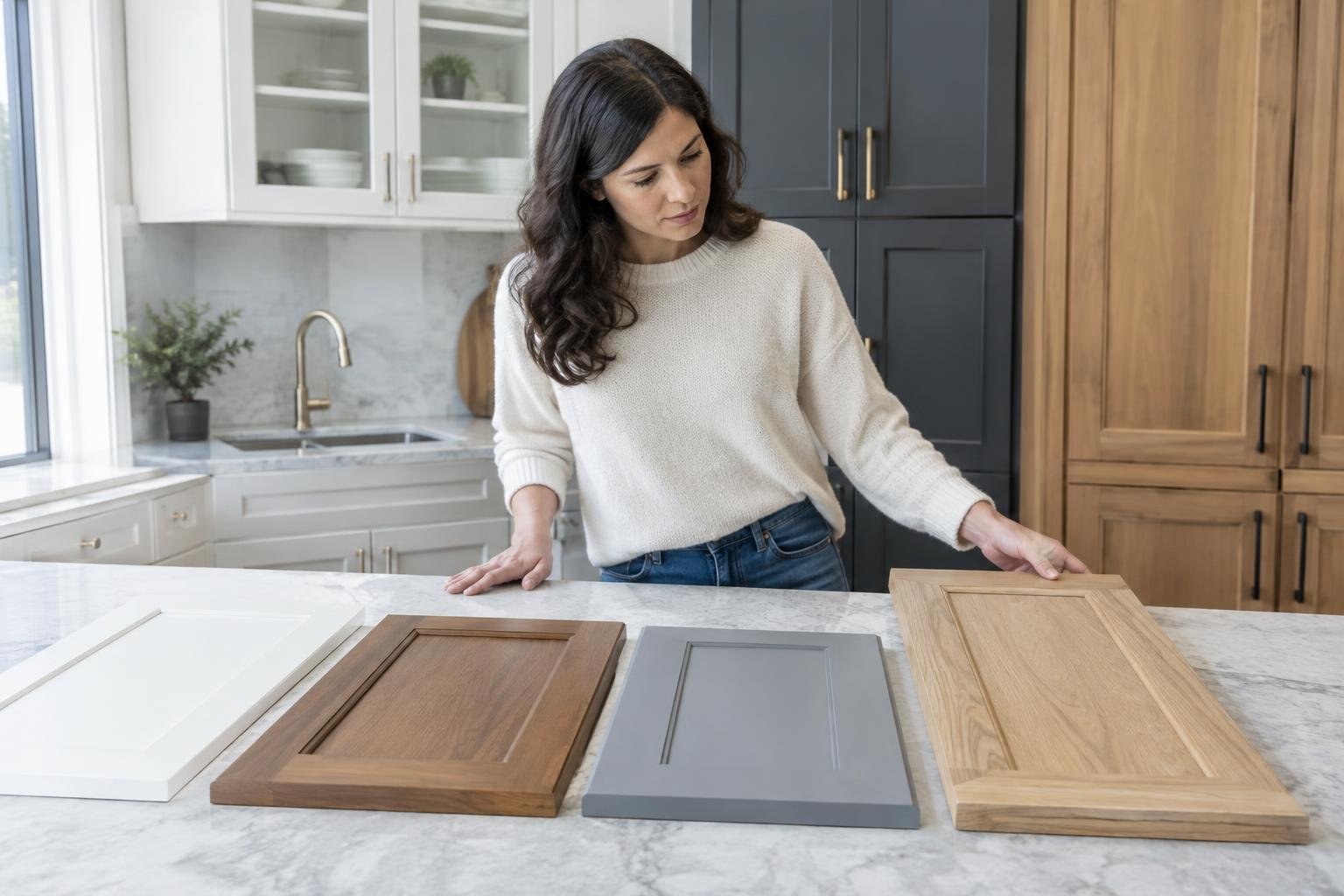
What makes a kitchen cabinet the best choice?
“Best” depends on what you need the cabinets to do. A straightforward layout with standard dimensions may be served by a stock product. A kitchen that needs more configuration may benefit from semi-custom choices. Custom cabinetry can be considered when the project depends on a more individually tailored design. These labels describe broad approaches, not a guarantee of construction quality.
Published brand lists also reflect different selection methods. Some group products by price tier, while others compare stock, semi-custom and custom lines or highlight particular style and storage features. Treat a ranking as a shortlist, not as proof that one cabinet line is right for your kitchen.
Before comparing brands, decide what matters most: budget, design, storage, flexibility, appearance, project schedule or a balance of several priorities. Then evaluate specific products against those needs.
What does buying kitchen cabinets include, and how does the process work?
A cabinet project is more than choosing a door style. The buying process should connect the kitchen design to the exact cabinet products, layout, order and installation responsibilities. Before committing, clarify what is being supplied and what work is included.
- Set priorities. List the storage, look, price and configuration needs that matter most.
- Review the layout. Check that the proposed cabinet arrangement works with the room and the kitchen elements that must remain in place.
- Select a cabinet category and product. Compare actual sizes, finishes, construction and options rather than assuming products within a category are identical.
- Review the quote and order. Confirm the included cabinets, accessories, delivery, installation and exclusions in writing.
- Coordinate the work. Agree on who is responsible for measurements, installation, adjustments and resolving product or fit issues.
Brand reviews can help generate options, but they do not define the scope of a specific project. A useful comparison is between complete proposals that describe what you will actually receive.
Signs you may need new kitchen cabinets
Consider new cabinets when the current ones no longer serve the kitchen’s needs or when a planned renovation calls for a different cabinet layout, appearance or level of configuration. A change in style alone does not automatically mean every cabinet must be replaced. First establish whether the project’s actual goal requires new cabinets and what work that would involve.
Write down the specific problems you want to solve. These might be insufficient storage, a layout that does not meet your needs, a desired appearance that the existing setup cannot provide, or a project that calls for cabinet sizes or arrangements different from what is there now. Treat each item as a design requirement, then ask providers which proposed changes address it.
Also consider whether the kitchen’s existing arrangement can stay largely intact. If it can, compare cabinet options within that scope before assuming that extensive customization is necessary. If it cannot, ask for a proposal that clearly shows the intended layout and explains the choices that drive the recommended cabinet category.
The goal is not to buy cabinets because a particular brand or style is being promoted. It is to select a product and project scope that answer a real need.
Kitchen cabinet cost: what to compare in a quote
There is no supported one-size-fits-all price for the best kitchen cabinets. A useful budget starts with quotes for the same products and scope, because a cabinet-only figure cannot fairly be compared with a proposal that includes additional project work.
Ask each provider to identify, in writing:
- The cabinet line, category, sizes and quantities included.
- Door and finish selections, hardware and storage features.
- Any custom configuration or special sizing.
- Delivery and installation responsibilities.
- Work that is excluded or billed separately.
- Applicable warranty details and the process for addressing issues.
Compare what each quote covers before comparing totals. If one proposal includes different products or services, ask for a revised version with a comparable scope. Request clarification when line items use broad descriptions such as “cabinet package” without identifying the product or included components.
Cabinet roundups sometimes separate products by price tier, which can help consumers frame a shortlist. A tier is not a project estimate, however. Use current, project-specific written quotes to make a purchase decision.
Factors that affect the cabinet project and its price
Project price and suitability can change with the cabinet category, product line and degree of configuration. Sources that compare kitchen cabinets cover stock, semi-custom and custom options, while some evaluate choices across price tiers. These categories are useful for organizing a search, but product specifications and quote details still matter.
Other choices to investigate with the provider include cabinet sizes, finish, door design, hardware and organizational features. Ask which are included in the quoted product and which are optional. For a layout that uses standard choices, compare relevant stock or semi-custom products. When the design depends on a greater degree of tailoring, ask whether a semi-custom line can meet the need before moving to a custom proposal.
Compare proposed products on an equal basis. A named brand may offer more than one line or category, so a recommendation about a company should not be assumed to describe every cabinet it sells. Request the exact line and product information, then match it against your priorities and budget.
Stock vs. semi-custom vs. custom kitchen cabinets
Stock, semi-custom and custom cabinets involve different levels of choice, but names alone do not tell you whether a product will meet your requirements. Confirm the choices and limitations of the specific line.
| Option | What to investigate | May suit | Potential tradeoff |
|---|---|---|---|
| Stock | Standard sizes, available finishes, product details and delivery terms | A project that can use the product’s standard choices | Less room to adapt the product if the plan needs different specifications |
| Semi-custom | Which dimensions, finishes or storage features can be configured | A project that needs some flexibility without assuming every element must be bespoke | Actual flexibility depends on the product line and should be verified |
| Custom | Design scope, product specifications, quote detail and responsibilities | A project whose requirements call for an individually tailored approach | Do not assume the label alone establishes value or quality |
One published recommendation favors framed, all-plywood semi-custom cabinets for many standard projects, describing a balance of durability, flexibility and value. Treat that as a starting point to investigate, not a universal rule. Confirm construction details and compare other suitable products for your kitchen.
Brand lists include a range of categories and price positions. For example, research characterizes IKEA as a lower-cost option and describes Fabuwood as a stock choice for style and faster delivery. Such descriptions are not substitutes for checking the current product, terms and local project quote.
How to evaluate cabinet construction, materials and design
Do not compare cabinets by appearance alone. Ask for product documentation that identifies how the specific cabinets are constructed and finished. If a proposal describes a feature as “premium” or “durable,” ask the provider to explain what that means for the product being quoted.
Useful items to verify include the cabinet box material, doors, drawer construction, shelves, finish, hardware and any included organizational features. Ask whether the displayed sample represents the actual line in the quote. For semi-custom products, determine which elements can be selected or changed; for custom proposals, make sure the design and product scope are clear enough to review.
Some guidance recommends framed, all-plywood semi-custom cabinets as a balance for typical projects, but that does not show that every product described as semi-custom uses the same materials or construction. Look beyond category and marketing language. Get the specific product information and compare it with your priorities, expected use and budget.
Style matters too. Compare door design and finish samples in the context of the overall kitchen plan. A product can look appealing in a photo but still be an unsuitable choice if its specifications, options or quote do not fit the project.
What to expect: ordering and project timing
Expect the schedule to depend on the selected product, the project scope and the provider’s stated ordering and installation plan. The research available for this guide does not establish a general lead time, so do not rely on a brand description or informal estimate as a guaranteed completion date.
Ask for a written schedule that identifies important milestones, including design approval, ordering, expected delivery, installation and any follow-up adjustments. Confirm when the provider considers your selections final and how changes after approval may affect the plan. Ask who will communicate if the delivery or work dates need to change.
Before placing an order, review the final cabinet list, layout, finish and included features against the proposal. A clear written plan helps you understand what is expected and gives you a reference if the delivery, installation scope or products differ from what you approved.
How to choose a qualified cabinet provider
Choose a provider who can explain the specific cabinet product, project scope and installation arrangement in plain language. A brand name or low bid alone does not establish that the proposal is a good fit.
Ask prospective providers:
- Which exact cabinet line and options are included?
- Who is responsible for checking measurements and confirming the order?
- Who will install the cabinets, and what work is included?
- What is excluded from the quote?
- How are changes documented and priced?
- What warranty information applies, and who handles a concern?
- Can you review relevant project examples and contact references?
Compare answers as well as prices. A complete proposal makes it easier to judge whether providers are offering the same products and responsibilities. Ask for unclear statements to be clarified in writing before you select a provider or authorize an order.
Explore cabinet options at CabinetSupply.com for your next project. Use the information you gather to create a shortlist and ask providers informed questions about product details and project scope.
Permits, credentials, warranties and project safety
Before work begins, confirm which rules, permits or credentials apply to your project with the appropriate local authority and the provider responsible for the work.
Ask the provider to explain who is responsible for any required approvals and how related work is coordinated. If the cabinet project is part of a broader renovation, clarify who handles work outside the cabinet supply and installation scope. Do not assume that a cabinet quote includes other trades, approvals or related services unless it says so.
Request applicable warranty information for the products and ask how concerns are handled. Confirm whether product and installation responsibilities are addressed separately, and keep the final quote, product selections and written changes together. Do not authorize work based on verbal assurances that conflict with the documents.
Ways to save safely on kitchen cabinets
To reduce cost without making a poorly informed compromise, focus the project on requirements you genuinely need. Compare stock and semi-custom options where either category could fit, and ask whether a proposed custom feature solves a specific problem in the design.
- Keep a workable existing layout where it meets your needs, rather than adding changes without a clear purpose.
- Compare quotes for the same cabinet line, options and scope.
- Ask which storage features and finish choices are included and which increase the quoted price.
- Consider products across more than one price tier, while checking their specifications rather than assuming low price means a poor fit or high price means a better choice.
- Get design and product choices in writing before approving an order.
Do not save money by skipping a careful review of measurements, product details, installation responsibilities or warranty terms. A lower initial quote is difficult to evaluate if important work or products are missing from its scope.
Common mistakes and a kitchen cabinet buying checklist
Cabinet comparisons can go wrong when buyers choose from a ranking, image or brand name without checking the exact product and project scope. Avoid these common pitfalls:
- Assuming a brand has one uniform level of quality. Identify the exact cabinet line and specifications.
- Treating category labels as complete specifications. Ask which sizes, finishes and configuration options are available.
- Comparing unlike quotes. Match cabinet products, features, delivery and installation responsibilities.
- Choosing by appearance alone. Review construction, finish and included components as well as style.
- Leaving changes undocumented. Request written confirmation of approved selections and revisions.
- Accepting vague warranty or installation language. Ask who is responsible and how issues are addressed.
Before you approve: confirm the cabinet line and layout; check sizes, finishes and selected features; read inclusions and exclusions; understand the provider’s responsibilities; compare written warranty information; and keep copies of the final proposal and approved changes. If a provider cannot clearly identify what is included, pause and ask for clarification.
Practical takeaways before you order
A useful cabinet decision starts with your kitchen’s requirements and ends with a written understanding of the products, price and work. Shortlist options by cabinet category, then verify the exact line and its features. Compare providers on scope and clarity as well as the bottom-line figure.
Online brand lists can introduce products across budgets and cabinet categories, but they cannot decide which combination fits your kitchen. Take your shortlist, layout questions and budget priorities to a provider and ask for a proposal you can compare line by line.
Frequently asked questions
What are the best kitchen cabinet brands?
There is no single brand that is best for every kitchen. Compare the cabinet’s construction, available sizes and finishes, storage options, price, warranty and installation support against your project needs. Brand roundups can help you create a shortlist, but verify current specifications and the full quote before ordering.
Are stock, semi-custom or custom kitchen cabinets best?
Stock cabinets are typically the most standardized option, semi-custom cabinets offer some configuration choices, and custom cabinets are made to suit a particular design or space. Compare actual size choices, materials, finish options, lead time and total project price rather than relying on the category name alone.
How much do new kitchen cabinets cost?
Ask for a written, itemized quote that separates cabinets, delivery, installation and other project work, then compare the same scope with other bids. Layout changes, customization and selected features can affect the quote.
Are semi-custom kitchen cabinets worth it?
A semi-custom cabinet line may offer a useful balance of configuration choices and price for kitchens that do not require fully bespoke cabinetry. Confirm what can actually be changed, what construction is included and whether the proposed sizes work in your kitchen before deciding.
How can I tell if kitchen cabinets are good quality?
Compare the cabinet boxes, doors, drawers, finish, hardware, available storage, warranty and installation details in the product documents and quote. Do not judge quality from a photograph or brand name alone. Ask the seller or installer to identify the exact product and components being supplied.
How can I save money on kitchen cabinets without sacrificing quality?
Keep the existing layout when it still works, limit custom sizing and optional features, and compare stock and semi-custom products that meet your requirements. Do not cut costs by skipping accurate planning, needed installation work or a review of warranty terms.
People Also Ask
How do I choose the best kitchen cabinets for my home?
Start with the kitchen’s layout and identify the storage, appliance and appearance requirements the cabinets must meet. Then compare stock, semi-custom and custom products by their actual options, construction details, quote and installation plan. There is no brand that is automatically best for every project.
What type of kitchen cabinets offer the best value?
A framed, all-plywood semi-custom option is one recommendation for homeowners who want a combination of flexibility and value in a standard layout. It is not a universal answer: compare the specific product construction and quote with suitable stock and custom alternatives.
What is the difference between stock and semi-custom cabinets?
Stock cabinets focus on standardized choices, while semi-custom lines may provide additional configuration options. The exact selection varies by product, so ask for the manufacturer’s current size, finish and accessory details rather than assuming every line offers the same choices.
Can I rely on online kitchen cabinet brand reviews?
A cabinet brand roundup can help identify products to investigate, but it does not replace a project-specific comparison. Check the exact cabinet line, included features, terms and total quote, since a broad brand ranking may group products by price tier or category.
What should a kitchen cabinet estimate include?
Ask the provider to identify the exact cabinets, construction and finish in the quote; explain what installation includes; state any exclusions; and provide applicable warranty information. Check that the selected products and project scope match the agreed design before ordering.
The best kitchen cabinets are the ones that fit your room, priorities, budget and expected use, not simply the cabinets with the highest ranking or most features. Compare stock, semi-custom and custom choices by their actual construction, design flexibility, included storage, installation plan and written warranty. Review complete project quotes before choosing, and confirm that the cabinets work with your layout and appliances. Explore cabinet options at CabinetSupply.com for your next project.
Your next step
Explore cabinet options at CabinetSupply.com for your next project.
Last reviewed and updated October 12, 2026 by the CabinetSupple Editorial Team.
Sources
- My top 3 cabinet companies — Fresh Design Group
- The Best Kitchen Cabinet Brands, According to Home Renovation Pros
- The Best Kitchen Cabinets of 2026 | Fixr.com
- r/cabinetry on Reddit: Best Kitchen Cabinets What Are the Top Cabinet Brands and Manufacturers Contractors Actually Recommend
- Top 20 Best Kitchen Cabinet Brands in 2026 | George Cabinetry
- Best Kitchen Cabinets to Shop for a Game-Changing Kitchen Reno
- Best Kitchen Cabinets 2026: Top Rated Brands & Reviews
- Cabinet Reviews 2026: Ratings for the top 157 cabinet brands