
Kitchen cabinet hinges affect more than how a door swings. The hinge must fit the door and cabinet, allow the intended movement, and suit the look you want. If you are replacing worn hardware or updating a kitchen, first identify the existing hinge and how the door sits over or within the cabinet opening. Then compare compatible options before buying. This guide explains common hinge types, practical fit checks, replacement considerations, cost factors, and when professional help may be worthwhile.
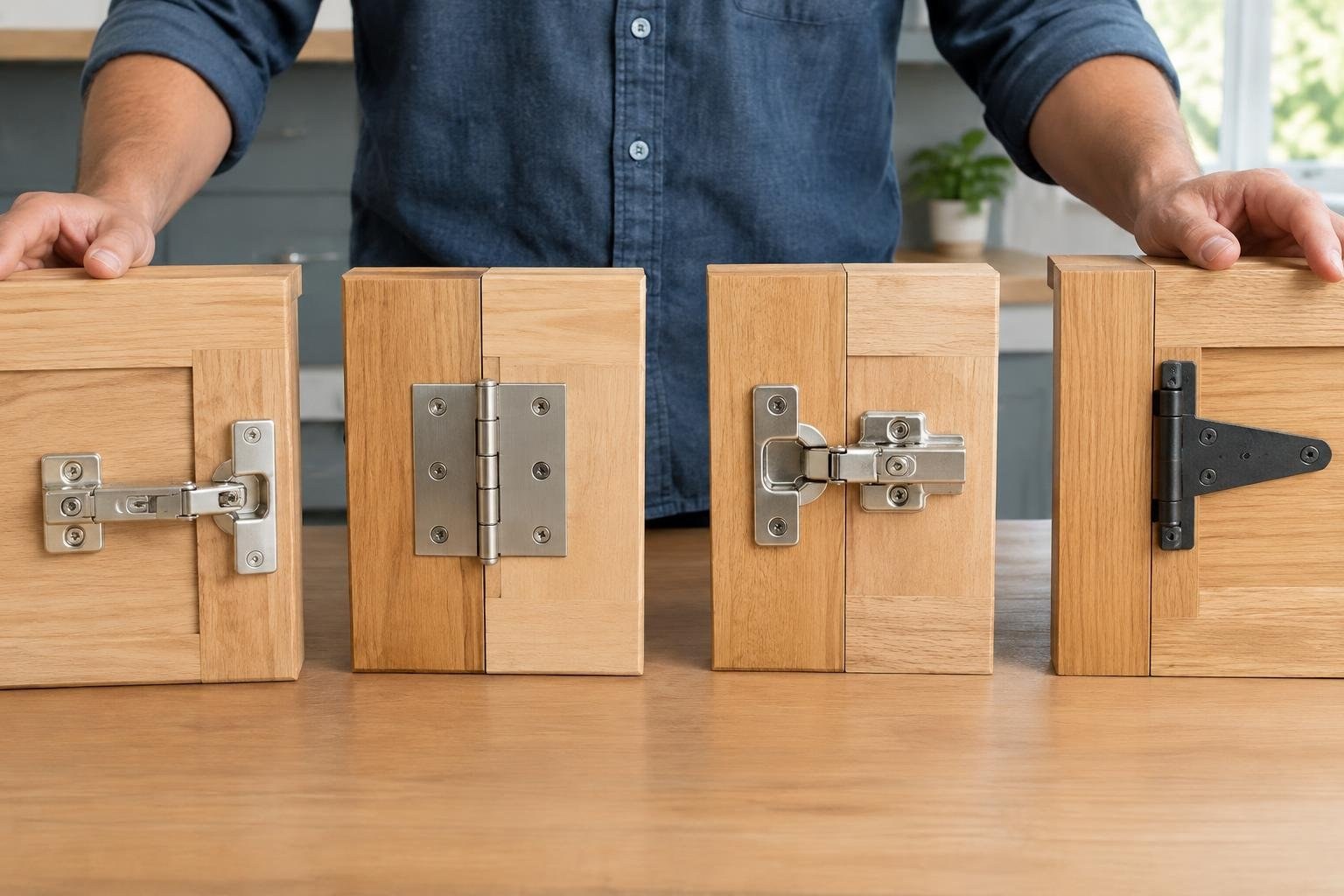
What kitchen cabinet hinges do and why fit matters
Kitchen cabinet hinges connect each door to its cabinet and determine how the door is supported and moves. The right replacement is not simply the one that looks similar: it must suit the position of the door, the cabinet construction, and the intended opening action.
Product choices include overlay and inset hinges, concealed styles, demountable hinges, compact hinges, and continuous piano hinges. Options also vary by finish and by special application. Some listings specify self-closing or soft-close functionality. These terms describe different product characteristics, so check the individual product details rather than assuming every hinge offers every feature.
For a simple replacement, begin with the existing hinge and the door’s position when closed. For a larger kitchen update, consider how visible hardware, finish, and door style work together. A small hardware change can alter the overall look, but compatibility should remain the first filter.
Signs your cabinet hinges may need attention
Replacing or adjusting a hinge may be worth considering when a cabinet door is loose, sits unevenly, rubs against an adjacent surface, or no longer moves smoothly. These symptoms do not prove that the hinge itself is the only problem. The door, attachment points, cabinet, or nearby doors may also need attention.
- Look for a hinge that is bent, visibly damaged, loose, or different from the hardware on nearby doors.
- Check whether the door appears to sit differently when closed or interferes with another door or drawer.
- Open and close the door gently to notice scraping, sticking, or unexpected movement.
- Inspect the cabinet and door where the hinge attaches. If the material is damaged, installing new hardware alone may not solve the issue.
Do not force a door that is binding or hanging insecurely. A careful inspection helps distinguish a straightforward hardware replacement from a repair that needs a cabinet professional.
Kitchen cabinet hinge costs and what affects the price
Hinge project costs depend on the product, the number of doors, and the work needed to get each door operating and aligned. There is no single useful price for every kitchen: replacing a few accessible hinges is different from changing hardware across a whole room or correcting damaged attachment points.
When comparing prices, ask whether the quote covers the hinges, mounting parts, removal of old hardware, installation, adjustment, and cleanup. If the work includes repairing a damaged cabinet or door, ask for that work to be described separately. Product choices such as finish, hinge style, special application, or soft-close action may also affect the total.
For a do-it-yourself project, compare the cost of a compatible set and any needed tools or replacement mounting parts. Avoid choosing a low-cost hinge before confirming that it fits. A product that cannot be installed correctly is not a saving.
What affects hinge compatibility and project complexity?
Door position and cabinet construction are the first compatibility checks. Full overlay, partial overlay, and inset hinges are intended for different door relationships to the cabinet. A product listing may also distinguish concealed, hidden, compact, or special-application hinges.
Before ordering, note how the existing hinge attaches, where it sits, and whether it is visible with the door closed. Record identifying marks or product information if available. Measure the relevant door and hinge dimensions, and compare them with the replacement product’s stated requirements. Do not assume that similar-looking hinges use the same mounting arrangement.
For a remodel, make a list of the doors that need hardware and check for corner or compact applications where a standard choice may not suit the layout. Product selections span traditional, European, and special-application styles, so the label and fit instructions matter more than a broad category name.
Cabinet hinge options and tradeoffs
| Option | What to consider | May suit |
|---|---|---|
| Overlay hinge | Choose according to how much the door covers the cabinet face or frame. | Doors that cover some or all of the cabinet face. |
| Inset hinge | Confirm the door sits within the cabinet opening and check the specified inset fit. | Inset doors where the hinge is designed for that position. |
| Concealed or hidden hinge | Check mounting arrangement and whether the selected model provides the desired movement. | A cleaner appearance when the door is closed. |
| Demountable or compact hinge | Confirm the product is intended for the cabinet and application in question. | Specific replacement or space-constrained applications. |
| Continuous piano hinge | Review the intended door and cabinet application before choosing a full-length hinge. | Projects where a continuous hinge is specified. |
These names identify broad hinge styles, not a promise of universal interchangeability. Product catalogs also list decorative, traditional, European, and special-application hinges. Compare the actual measurements and mounting details for the exact model.
Visible or concealed? Visible hinges can contribute to the cabinet’s decorative look. Concealed hinges keep the hinge less visible when the door is closed. Neither is automatically the better choice: the decision depends on cabinet compatibility and the appearance you want.
Soft-close or standard movement? Soft-close is a feature to verify on the individual product. If that action matters, make it a stated requirement and confirm it in the product description rather than assuming it comes with a particular hinge style.
Choosing hinge finishes and coordinating cabinet hardware
Finish is a visible design choice, but it should come after fit. Hinge selections are offered in multiple finishes, and decorative as well as concealed options are available. Consider whether the hinge will be visible with the door closed and how its finish relates to cabinet doors, pulls, knobs, and other nearby details.
For a cohesive update, compare samples or product images in the context of the room when practical. Check whether the hinge is intended for the door style and cabinet arrangement you have. If you are updating only some doors, confirm that the replacement appearance will not create an unintended mismatch with the rest of the kitchen.
Keep the decision functional as well as visual. A finish that looks right cannot compensate for a hinge that does not fit or operate correctly.
What to expect during hinge replacement and how long it takes
Hinge replacement usually involves identifying the existing hardware, checking the fit of the new parts, removing and attaching hardware, and then testing the doors. The amount of work depends on the number of doors, access, and whether repairs or adjustments are needed.
- Document the existing setup. Photograph the hinge and note how the door sits when closed.
- Confirm the replacement. Compare type, dimensions, mounting arrangement, finish, and any requested closing feature.
- Prepare the work area. Clear the cabinet and support the door so it cannot fall unexpectedly while hardware is handled.
- Install carefully. Follow the product instructions and use suitable fasteners. Do not force a screw into damaged material or an incompatible hole.
- Test and inspect. Open and close the door gently, check that it clears neighboring doors and drawers, and make any permitted adjustments described by the manufacturer.
There is no dependable universal installation time. A single straightforward replacement and a kitchen-wide change with alignment or repair needs are not equivalent. Ask an installer to estimate the work based on the actual number and condition of doors.
DIY or professional installation: how to decide
DIY replacement can be reasonable when you can identify a compatible hinge, support the door safely, and work accurately with basic tools. Hiring a cabinet professional is a sensible option when the door is heavy, the cabinet or attachment point is damaged, the hinge type is unclear, or repeated adjustments have not corrected the problem.
Do not treat hinge installation as permission to alter electrical, plumbing, structural, or other regulated building components. If the wider project involves those systems, consult an appropriately qualified professional and confirm local requirements.
For professional work, request a written scope that states which doors are included, the hinge type and finish, who supplies the hardware, whether removal and adjustments are included, and how unexpected damage or added work will be handled. Compare the scope and communication as well as the total price.
How to choose a qualified cabinet hinge provider
Choose a provider who can explain compatibility in plain language and is willing to inspect the doors and existing hardware before recommending a replacement. Ask about experience with your cabinet style and whether installation, alignment, and repair are included in the proposal.
- Request an itemized written estimate describing products and labor.
- Ask who is responsible for ordering and checking that the hinges fit.
- Clarify the expected schedule and how changes to the scope are approved.
- Ask how damaged mounting points or other concealed problems will be priced and authorized.
- Check references, relevant project examples, insurance, and any licensing required for the work in your location.
- Request written information about product coverage and the installer’s workmanship terms, if offered.
A low bid may omit hardware, adjustments, or repair work that another estimate includes. Compare like with like, and be cautious of pressure to approve unlisted changes or pay for work that is not described in writing.
Safety, local requirements, and warranty questions
Hinge replacement by itself generally centers on cabinet hardware, but project requirements depend on the work being proposed and local rules. If a broader remodel includes electrical, plumbing, structural changes, or other regulated work, confirm applicable permits and qualifications with local authorities and the professionals performing that work.
Ask for product information and written terms before purchasing or approving installation. Confirm what the product coverage includes, what the installer will adjust, and what happens if the chosen hinge does not fit as expected. Do not infer a warranty or a specific performance promise from a product category name.
Work safely: support the cabinet door while handling its hinge, use suitable fasteners, follow the product instructions, and stop if the attachment material is damaged or the door cannot be controlled securely.
Ways to control costs without risking a poor fit
Save money by narrowing the job to what is actually needed, not by choosing an unverified replacement. If only a few hinges are damaged, ask whether the rest are compatible and operating properly before replacing every hinge. If you are updating a whole kitchen, compare a complete project estimate with the cost of buying parts yourself and arranging installation.
- Photograph and identify existing hinges before shopping.
- Check the fit details before ordering, including door position and mounting arrangement.
- Compare complete sets and finishes, not just a single listed hinge price.
- Ask whether the provider can separate hardware costs from labor and repairs.
- Avoid late product changes after ordering; confirm the selection before work begins.
Do not save by forcing a near-match into place, reusing damaged attachment points, or skipping necessary adjustments. The goal is a compatible, secure installation, not the lowest upfront purchase price.
Common mistakes and a practical buying checklist
Use this checklist before ordering or approving work:
- Have I identified whether the door is overlay or inset?
- Have I recorded the existing hinge type and mounting arrangement?
- Have I checked the replacement’s stated dimensions and intended application?
- Do I know whether I want a visible or concealed hinge and whether soft-close is required?
- Does the quote specify the number of doors, hardware, labor, adjustments, and repairs?
- Is the door and cabinet material around the hinge in sound condition?
- Have I confirmed who handles fit problems, changes, cleanup, and product terms?
Common mistakes include buying based on appearance alone, assuming all concealed or overlay hinges are interchangeable, overlooking the door position, and forgetting to test clearance against nearby doors or drawers. Red flags include a provider who cannot describe the proposed hinge, refuses to put the scope in writing, or pressures you to accept extra work without explaining why.
Explore options for your cabinet project
If you are weighing a hinge replacement as part of a larger cabinet update, explore cabinet options at CabinetSupply.com. Consider your desired door style, hardware appearance, and project scope before deciding what to change.
Explore cabinet options at CabinetSupply.com for your next project.
Factors that affect the project
Several decisions can change the scope of a cabinet hinge project. First, the door position and cabinet construction determine which hinge styles may fit. Product options include overlay, inset, concealed, compact, and special-application hinges, so check the exact model’s mounting details and stated dimensions before choosing.
The number and layout of doors also matter. A project involving only a few replacements differs from one covering an entire kitchen, and corner or compact applications may call for a hinge designed for that use. Finish and movement features such as soft-close can further narrow the product choices. If a hinge attachment point or cabinet material is damaged, that condition may require attention beyond replacing the hardware.
- Door position and cabinet construction
- Number of doors and any corner or compact applications
- Hinge dimensions and mounting arrangement
- Chosen finish and requested closing feature
- Condition of the door, cabinet, and hinge attachment points
Before ordering or approving installation, identify these factors and confirm the proposed hinge fits the specific doors and cabinet layout.
Frequently asked questions
How do I know which kitchen cabinet hinges I need?
Start by identifying whether the door is full overlay, partial overlay, or inset, then check the current hinge type and mounting pattern. Compare those details with the replacement product before ordering.
What is the difference between concealed and visible cabinet hinges?
A concealed hinge is largely hidden when the cabinet door is closed. Visible hinges, including some traditional styles, remain part of the cabinet’s appearance.
Are all kitchen cabinet hinges soft-close?
Soft-close describes a closing action that slows the door near the end of its movement. Confirm whether the particular hinge you are considering includes that feature; not every hinge does.
Can I replace my cabinet hinges without replacing the doors?
Sometimes. The replacement must suit the door overlay or inset, cabinet construction, and existing mounting arrangement. Check the product’s fit details before assuming a different hinge will work.
How much do kitchen cabinet hinges cost?
Hinge prices vary by type, finish, features, quantity, and fit requirements. Compare the cost of a complete set of compatible hinges and any needed mounting parts, rather than comparing one hinge in isolation.
Can I install kitchen cabinet hinges myself?
A careful replacement can be a manageable project for someone comfortable with basic tools and precise measuring. If doors are heavy, damaged, difficult to align, or require unfamiliar drilling, consider a qualified cabinet professional.
What should I ask a cabinet professional about hinge replacement?
Check that the hinge is compatible with the cabinet and door, inspect the door and cabinet where it attaches, and ask what is included in the work. For professional help, compare written scope, price, timing, and responsibility for adjustments.
People Also Ask
What does overlay mean for kitchen cabinet hinges?
Overlay describes how much a cabinet door covers the cabinet face or frame when closed. Full, partial, and variable overlay hinges accommodate different door positions, so match the hinge to the actual cabinet and door rather than choosing by name alone.
What is an inset cabinet hinge?
Inset doors sit within the cabinet opening rather than covering the cabinet face. They need a hinge made for that position, and careful alignment matters to keep the door operating as intended.
Are European hinges the same as concealed hinges?
European-style and concealed hinges are commonly described as hidden when the door is closed. Check the product details for its mounting style and intended cabinet use.
Can you add soft-close hinges to existing kitchen cabinets?
Some hinge products include soft-close or self-closing action, while others do not. Review the specific product description and confirm that its movement and fit suit your cabinets.
Should cabinet hinges match cabinet knobs?
A matching finish can help visible hinges coordinate with other hardware, but compatibility comes first. Hinge selections include a range of types and finishes, so check both fit and appearance.
How do I fix a kitchen cabinet door that will not close?
A hinge may be a candidate for adjustment or replacement if the door no longer sits or moves as intended. First check for loose attachment points, damage, and interference; do not force a damaged door or hinge.
Choose kitchen cabinet hinges based on door position, cabinet construction, mounting details, and the movement and finish you want. Before buying, verify that the specific product fits your doors and project scope. Explore cabinet options at CabinetSupply.com as you plan your next cabinet project.
Your next step
Explore cabinet options at CabinetSupply.com for your next project.
Last reviewed and updated October 12, 2026 by the CabinetSupple Editorial Team.
Sources
- Cabinet Hinges | Shop Kitchen Cabinet Hinges
- Cabinet Hardware | Replacement Hinges & Parts
- Cabinet Hinges & Door Hinges – Largest Selection | CabinetParts.com
- Cabinet Hinges – The Home Depot
- Cabinet Hinges By Amerock | Hinges For Any Cabinet Door
- Cabinet Hinges – Blum, Self Closing, Concealed & Soft Close Kitchen Cabinet Hinges
- Cabinet Hinges: European, Concealed & More | HardwareSource
- Cabinet Hinges – HingeOutlet